

Lucchi et al. (2013). Geological history of the Panarea volcanic group (eastern Aeolian archipelago). The Aeolian Islands Volcanoes. Geological Society, London, Memoirs, 37, 351–395. http://dx.doi.org/10.1144/M37.12
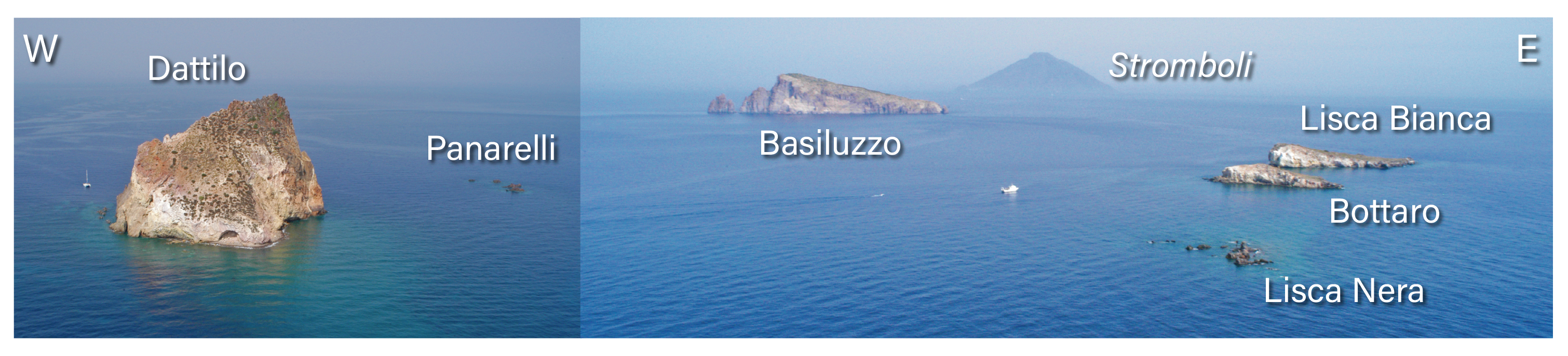
Photo 1 - Islets to the east of the island of Panarea and the island of Stromboli in the background. The islets are made up of domes and lava flows between about 13000 and 54000 years old. The submarine area of the islets was the one affected by an important and prolonged gas emission, starting from the end of 2002 (photo and elaboration by A.Esposito and B.Angioni INGV-ONT).
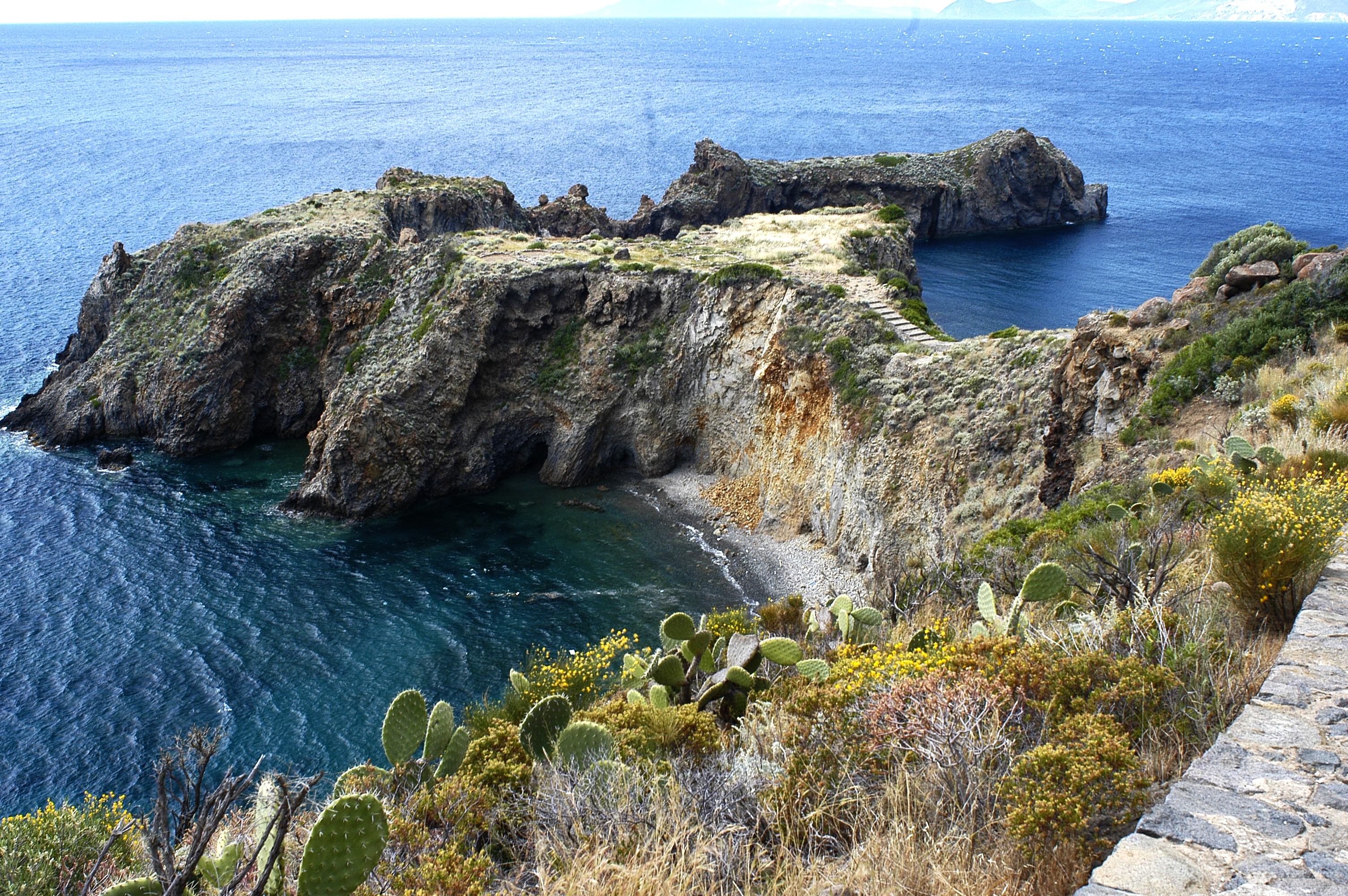
Photo 2 - Southern side of the island of Panarea in Punta Milazzese, where there is a famous prehistoric village of the Bronze Age built on a Tyrrhenian marine terrace (sub-flat area at the top of the cliff). The small promontory is made up of brecciated andesitic and dacitic lavas aged between 124 and 118000 years (photo by A.Esposito, INGV-ONT).
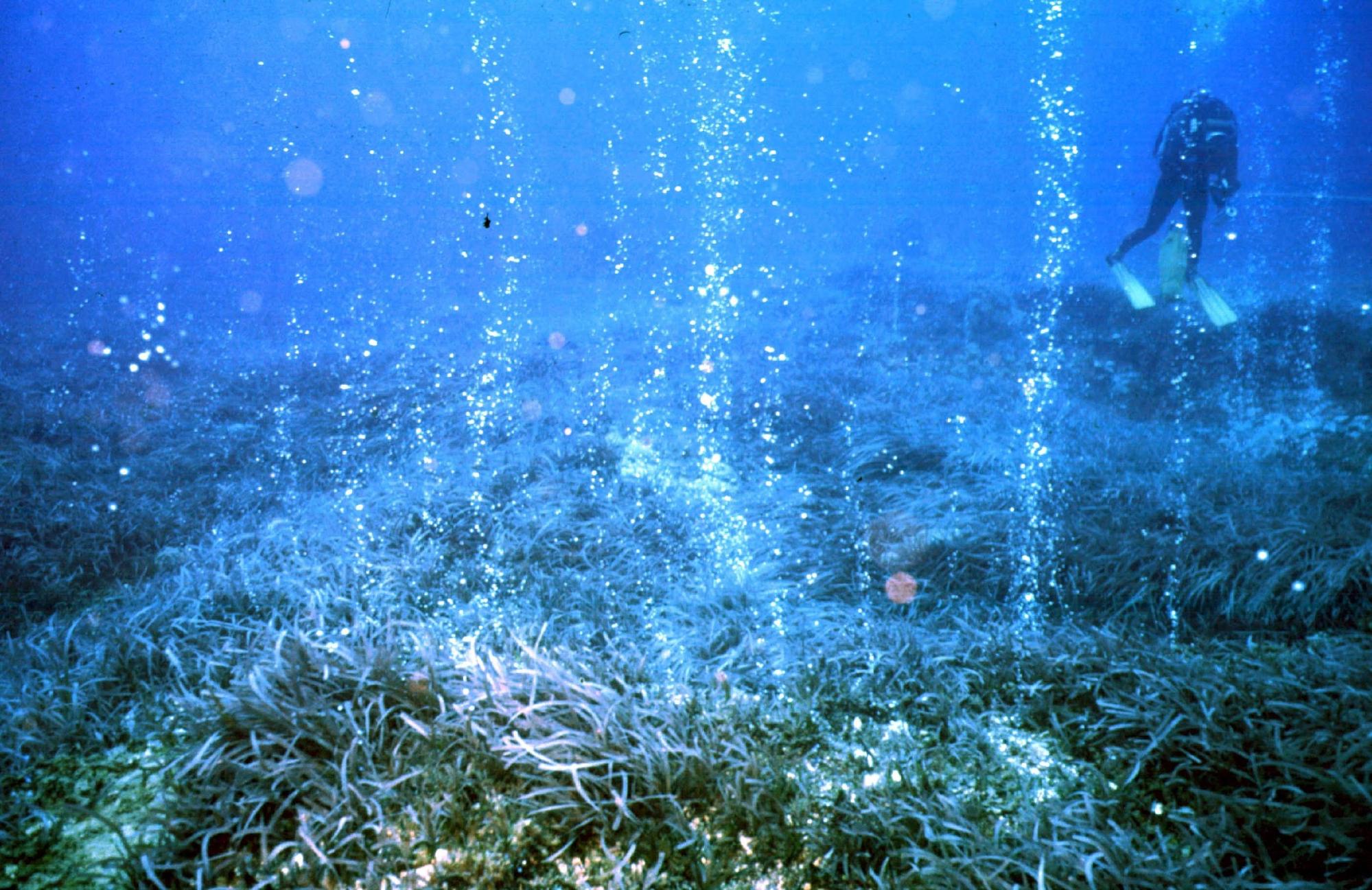
Photo 3 – Underwater area east of Panarea characterized by abundant gaseous emissions and site of the "crisis" which occurred between the end of 2002 and the first months of 2003 (photo by M. Anzidei, INGV-ONT).
Location and maximum height: 38 ° 38′14 ″ N , 15 ° 04′02 ″ E = 421 m asl
Total area: ≈ 3.35 km2
Volcano type: stratovolcano
Main types of eruptions: effusive, explosive
Prevailing phenomena: sporadic but intense underwater gaseous emissions around the island
Beginning of eruptive activity: 150.000 years
Last eruption: < 24000 years
Activity state: quiescent
Alert level: Basic
Panarea, together with Stromboli, constitutes the eastern sector of the Aeolian archipelago where the deepest seismicity is recorded due to the process of subduction of the African plate below the European one. Panarea is the relict of a larger stratovolcano which extends over an area with a diameter of over 23 km and which is mostly found submerged at 1000 m below sea level. According to the data collected on the ages of the rocks, the volcano has an eruptive history with both explosive and effusive eruptions, but largely dominated by the latter with the formation of numerous domes (see Lucchi et al., 2013, for details and other bibliography) . Most of the volcanic rocks of Panarea have a predominantly andesitic and dacitic composition, i.e. with silica contents ranging from 56% to 70% and there are only a few "basaltic" rocks. The volcanic activities at the origin of the outcropping products developed above all between 155.000 and 120.000 years ago. After a prolonged period of inactivity, the last eruptive period begins around 50000 years with some episodic activities that give rise to the lava dome of Basiluzzo (photo 1) and explosive eruptions from an eruptive center no longer visible located in the area currently occupied from the islets (photo 1). The island has beautiful cliffs overlooking the sea and marine terraces, which rise to different heights and reach up to 115 m asl, sometimes forming small sub-flat areas where important archaeological finds have been discovered dating back to Bronze Age settlements (photo 2). These morphologies are the expression of impressive uplift phenomena in the area, induced by volcano-tectonic thrusts that are no longer active, combined with the fluctuations of the sea. Today the island is in slow subsidence. The submerged area east of Panarea around the islets of Lisca Bianca, Lisca Nera, Bottaro and Dattilo is strongly fractured and the site of intense fumarolic activity (photo 3) and it is here that the "crisis" of 2002-2003 occurred , characterized by seismic swarms, high temperatures and the presence of magma volatile species. The gases that feed these emissions are believed to come from deeper magmatic reservoirs, with a rather complex system of rising pipes. The area of the fumaroles with its hydrothermal ducts, already known in Greek-Roman times, determines a micro-environment with acidic waters rich in CO2 where the life of numerous organisms is still possible, but to a lesser extent if compared to the neighboring areas.