

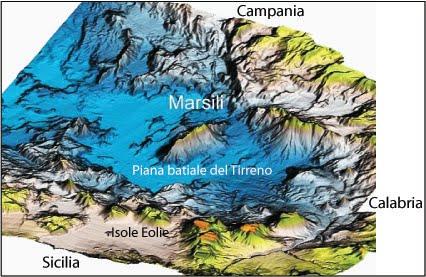
Figure 1 – Location of the Marsili volcano in the southern Tyrrhenian Sea (processed by G. Ventura, INGV-Roma1)
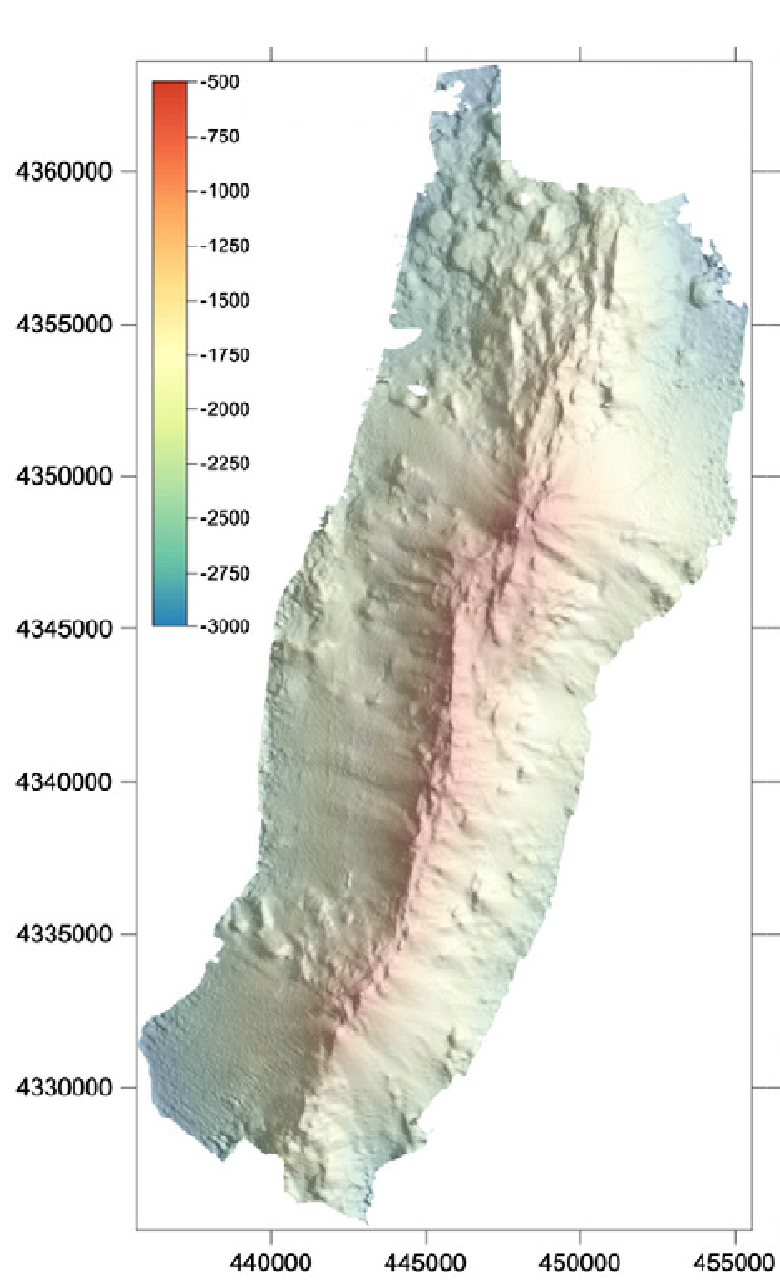
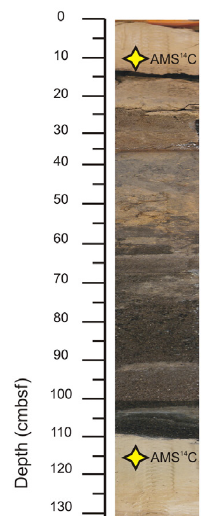
Figure 2 – Left: bathymetry of the Marsili volcano (S. Passaro (CNR) and G. Ventura INGV and CNR)); right: Marsili1 submarine gravity survey with the deposits of the last Marsili eruptions (dark levels). The light ocher levels are the fine sands and clays of the sediments of the Tyrrhenian Sea (S. Tamburrino (CNR) and G. Ventura).
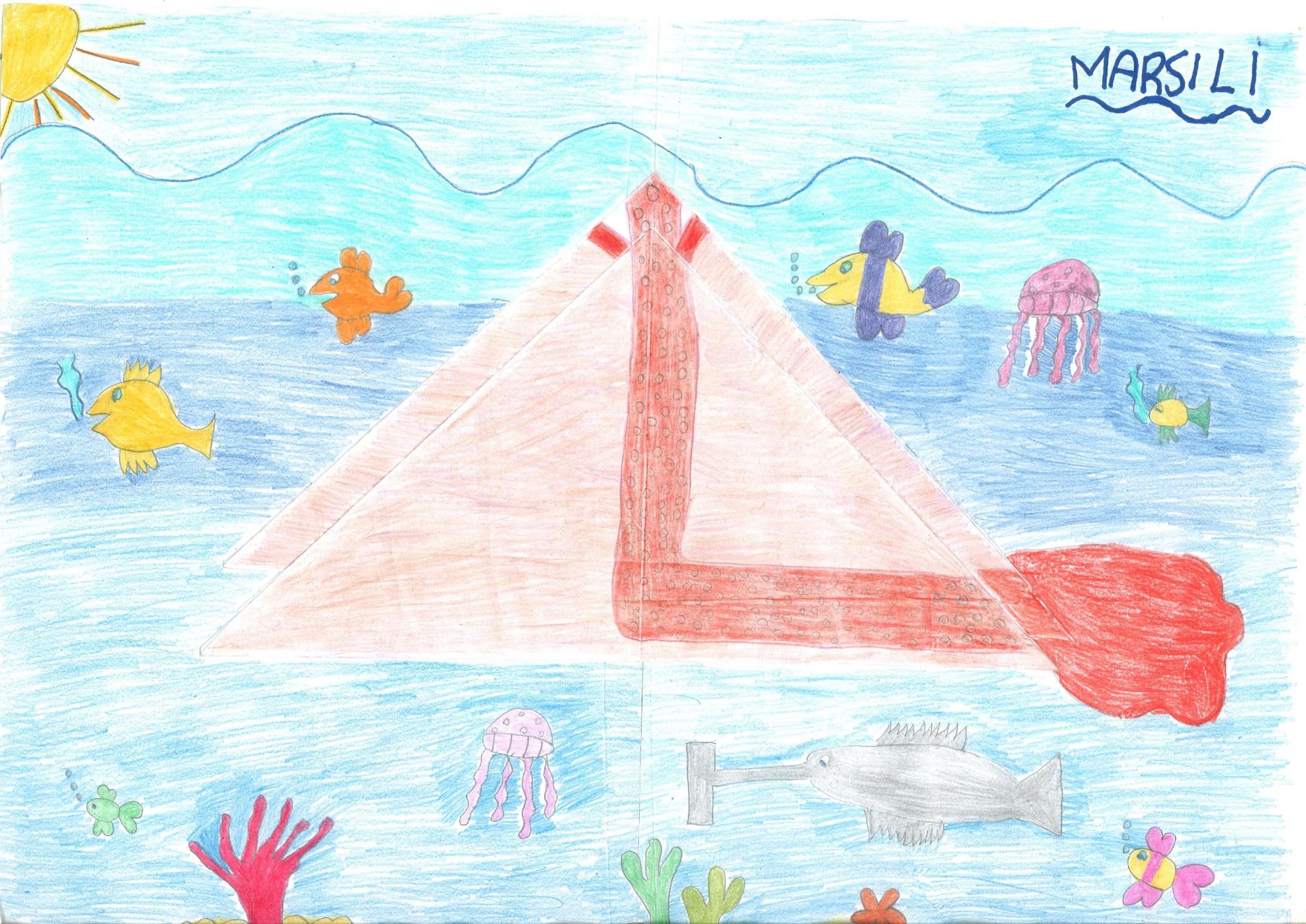
Figure 3 – The drawing of the Marsili volcano by the schoolgirl Chiara Pone (10 years old), from the Editorial Project of the INGV (Scientific Committee: Valeria Misiti and Maria Di Nezza) and of the Istituto Poligrafico dello Stato SpA: MAgMA MIA!
Location and maximum height: Southern Tyrrhenian Sea, 39° 14.912N -14° 23.228'E; Marsili Seamount= - 508 m asl
Area: ≈2100 km2
Volcano type: stratovolcano
Main types of eruptions: effusive, explosive
Prevailing phenomena: degassing in the central sector, seismicity
Beginning of eruptive activity: ≈0.7-1 million years
Last eruption: between 2100 and 3000 years ago
Activity status: active
Alert level (current): Not defined
The submarine volcano of Marsili is the largest and highest active volcano in the Mediterranean and in Europe, located in the central part of the oceanic basin of the same name. It has an elongated structure in the NNE-SSW direction and consists of several aligned eruptive fractures and over 80 minor eruptive centers (adventitious cones). It measures about 70 km in length and 30 in width. Its base is located in the Tyrrhenian bathyal plain at a depth of about 3400 m and its apex is at a depth of 508 m (Figures 1 and 2). Marsili has a very long eruptive history that began between 0.7 and 1 million years ago, of which little is known of course given the inaccessibility of the volcano. Its rocks have low to high chalkaline affinity in potassium and range in composition from basalts to trachytes. In its long activity, which can be placed above all between 0.78 and 0.1 on the basis of the available age data, it gave rise to mainly effusive and, to a lesser extent, low-energy explosive eruptions.
There have been some recent studies (eg Iezzi et al., 2014; Tamburrino et al., 2015 and read the blog link below) which have given new impetus to research on this volcano. These studies have established that the last eruptions took place in historical times, between 2100 and 3000 years ago, from small cones located in the central part of the volcanic apparatus. These studies and the articles published in popular newspapers and magazines have also ignited a great interest among the general public and enthusiasts, so much so that in popular volcanological seminars and in lessons for schools the question about Marsili is never missing! The volcano is also one of the most drawn by children (Figure 3).
The current activity of the Marsili is characterized by secondary volcanic phenomena, in particular submarine degassing, and by low-magnitude seismicity induced by volcanic-tectonic and hydrothermal processes; earthquakes are recorded only from stations placed on the seabed around the volcano. There is no morphological evidence of large landslides or collapses in the past, but research activities are underway to evaluate the effective stability of the building.
Link: https://volcano.si.edu/volcano.cfm?vn=211080
https://ingvterremoti.wordpress.com/2015/05/19/cosa-non-sappiamo-del-vulcano-marsili/